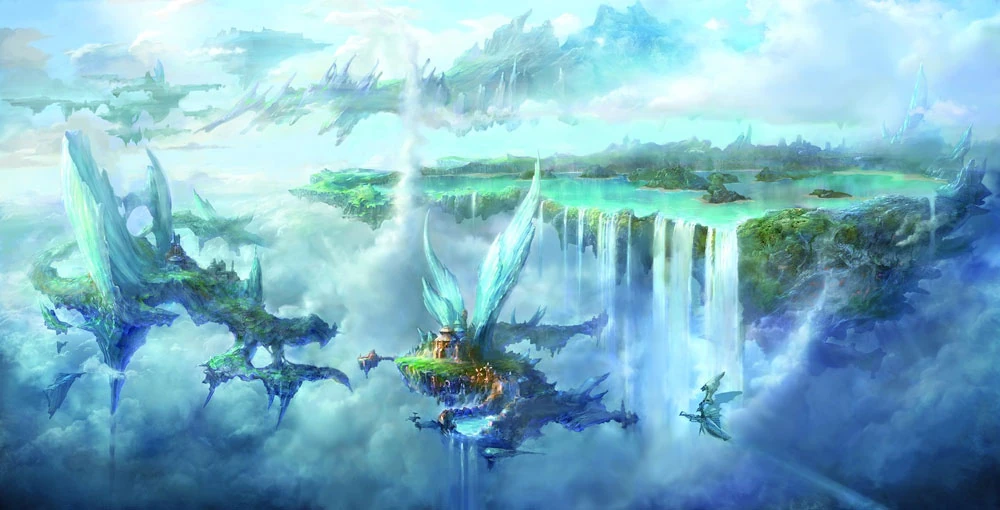

The floating continent of Lemurés in Final Fantasy XII: Revenant Wings.
A floating continent, a floating island, or a flying castle is a recurring type of location in the Final Fantasy series. A floating island in fiction is a landmass that floats, such as the flying continent of Laputa in Castle in the Sky. They can be free-floating, may be directed by the whim of their inhabitants, or others may be permanently anchored. In the the Final Fantasy series, floating landmasses are commonly, but not always, associated with ancient civilizations, often floated by technology that is now longer used or known in the modern day. In gameplay, floating continents often need an airship to reach.
Appearances
Final Fantasy
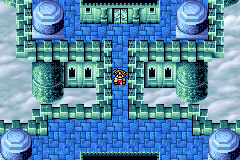

The Lufenians are known to the populace of the world as "Sky People" who once lived in flying cities. With their mastery of the wind element, they created a floating castle with the Mirage Tower serving as its gateway. The Sky People had invented mechanical beings, and A Lufenian named Cid invented the airship by using a levistone. The Flying Fortress had an observational window that the Sky People likely used to watch the world below them.
In the NES version, the Flying Fortress appeared more sci-fi-inspired and somewhat resembled a space station as the background below was a black void. In remakes, the location looks like a floating castle with a blue color scheme, with clouds below the floors. Yet, the denizens below appear unaware that a floating landmass exists in their world.
Final Fantasy III
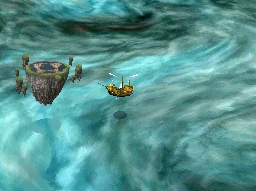

The floating continent in the 3D version.
The Floating Continent is the first world map that the player explores. It was created by Xande by accident and cared for by Owen and Desch. After Owen falls into a deep sleep that puts the Floating Continent in danger, Desch must go to the Tower of Owen to fix the situation. The Floating continent takes up the first portion of the game.
The Floating Continent from Final Fantasy III then appears as a stage in Dissidia Final Fantasy NT.
Final Fantasy V


Ronka Ruins, flying through the skies.
The ancient ruins were built by the Ronka civilization around the earth crystal, the power-source of this flying city. According to the "Chocobo's FF Laboratory" feature published in V Jump in 1993, Ronka was built as a floating city because people believed the sun had the power to cure disease and wanted to live closer to it. The anti-gravity technology used to lift Ronka was the same as used in creating airships. In modern day, it is abandoned however, as after the Ronka civilization fell, the Ronka Ruins were buried underground.
Final Fantasy VI
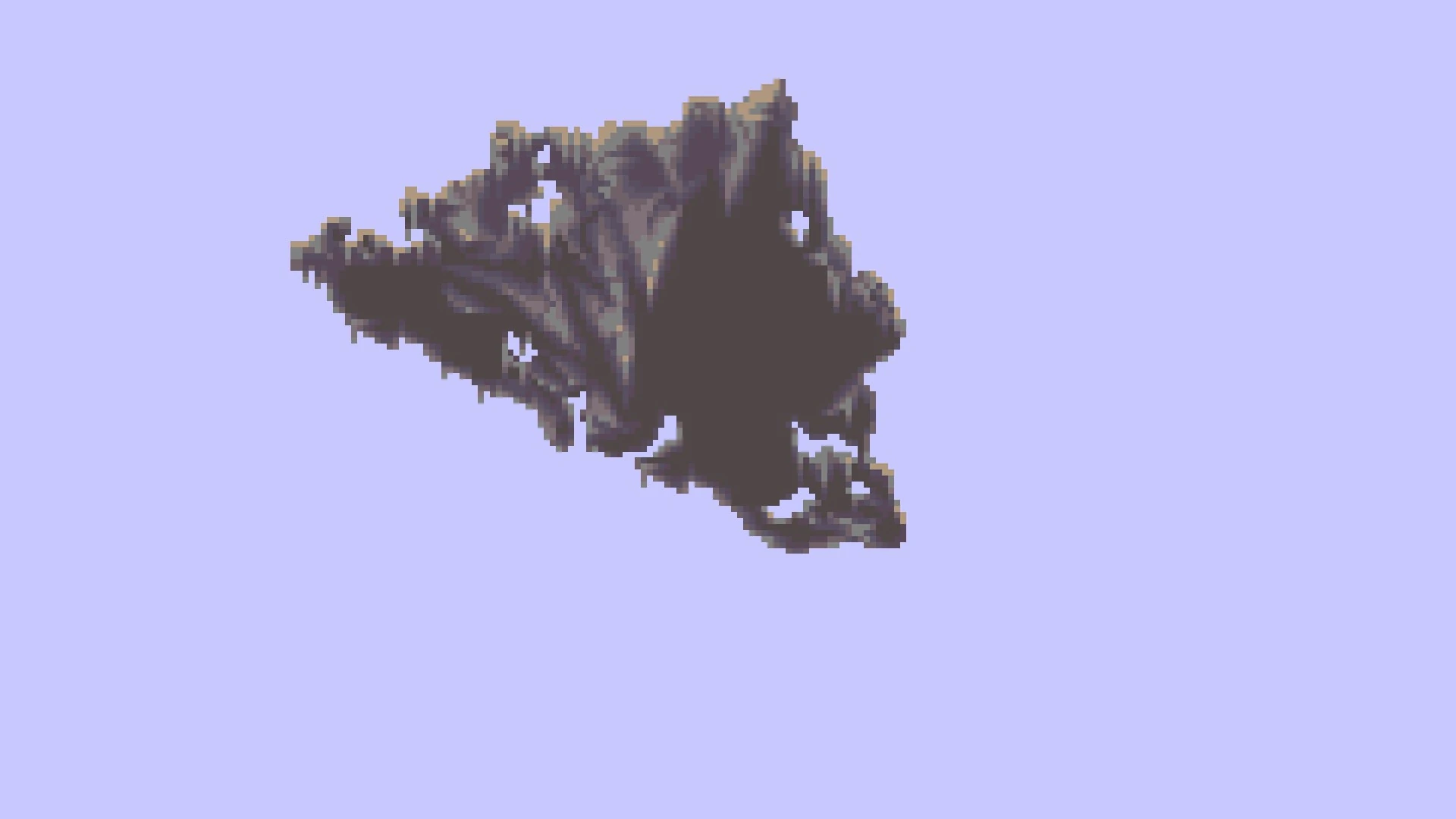

The floating continent was originally the eastern part of the southern continent where the Cave to the Sealed Gate was located, and was levitated by the power of the Warring Triad. It is the last dungeon in the World of Balance and a major point of no return. Using the Blackjack, the Returners fly to the floating continent to stop Emperor Gestahl's megalomaniac plans.
The developers did not initially intend to create a "world of ruin"; the plan was for the party to save the world just as it was about to be destroyed. However, because the game was coming along more smoothly than expected, the developers could free up time to implement another version of the world after its "end".[1] This would have made the Floating Continent the final dungeon.
The event "The Floating Continent" from Final Fantasy Brave Exvius is based on the Final Fantasy VI location.
Final Fantasy VIII
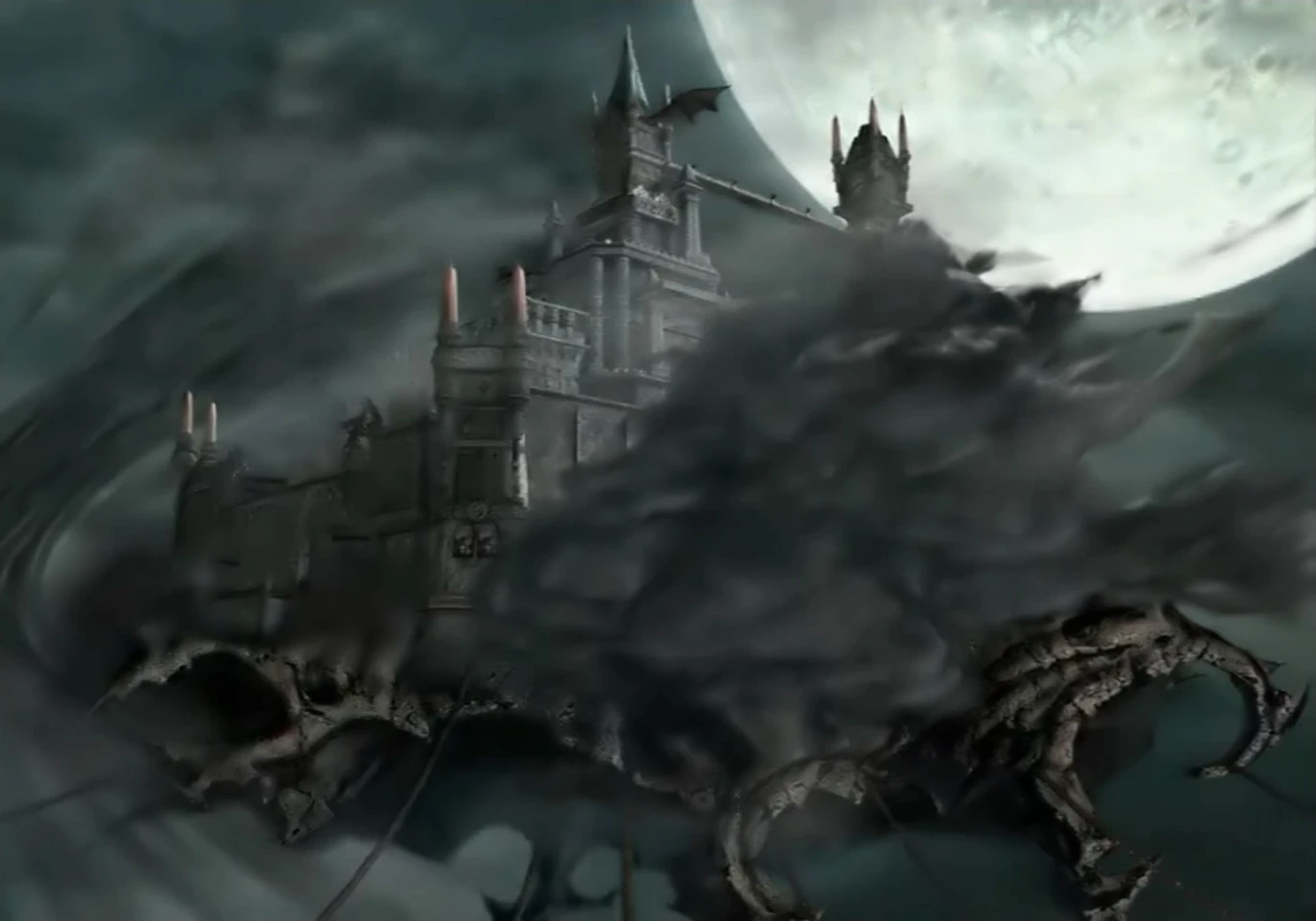

The final location of the game is a flying castle, moored to the landmass below by several giant chains.
Final Fantasy IX
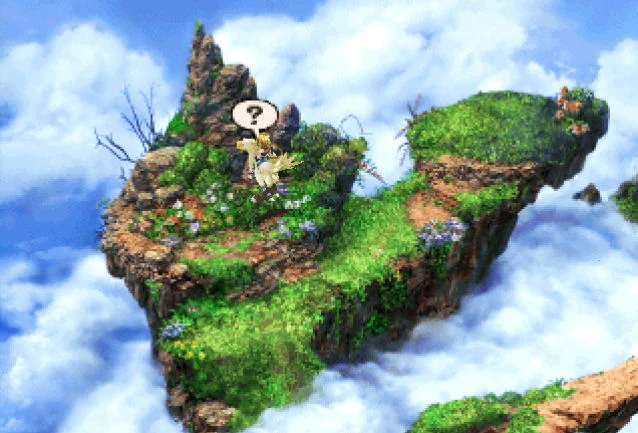

Chocobo's Air Garden is a floating island only accessible by golden Choco by finding a dark spot on the ground on the world map and using a Dead Pepper while flying over it. The Air Garden has a so-called "eidolon cave". If the player inspects it, they can fight the superboss Ozma.
Final Fantasy XII and Ivalice
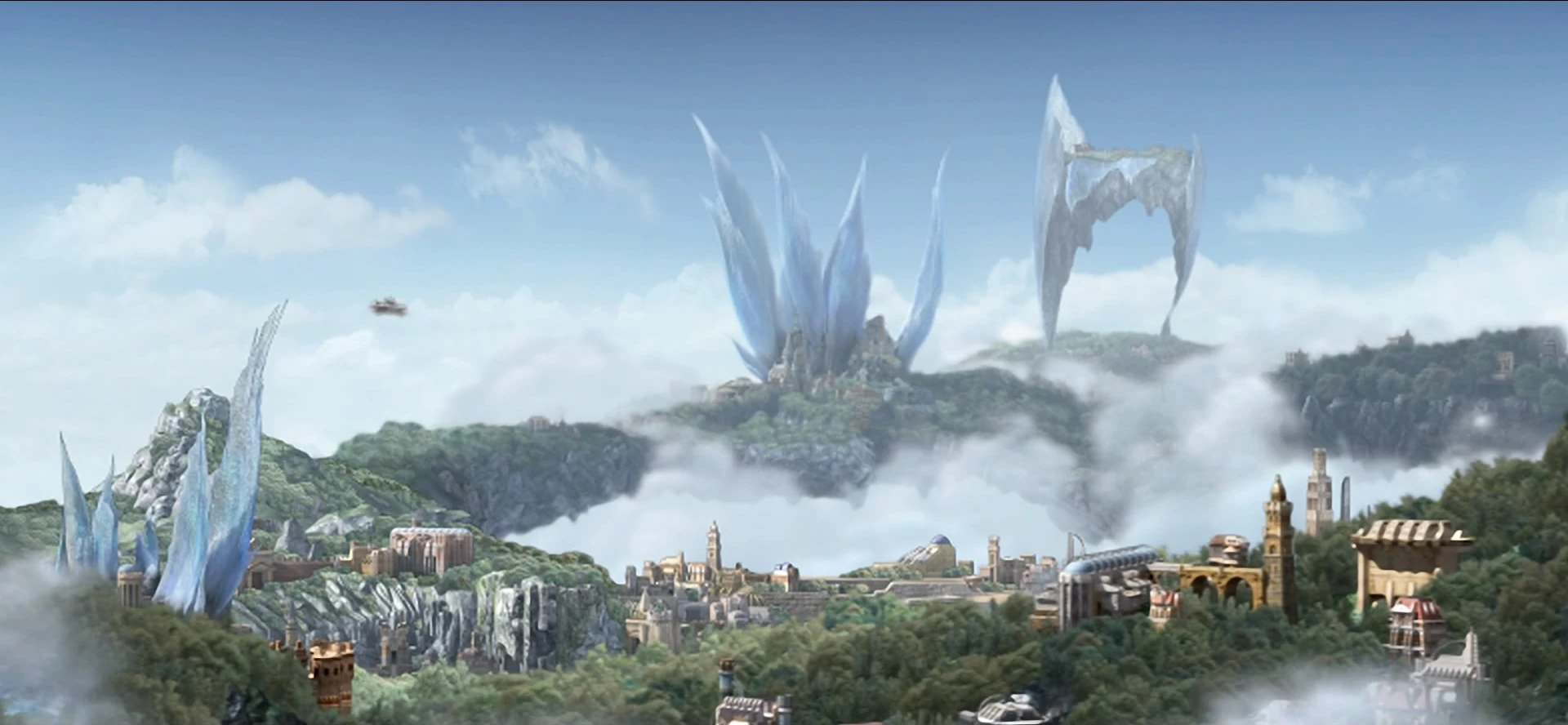

Bhujerba, the floating city in Final Fantasy XII.
The world of Ivalice has magick crystals embedded in its very soil, called magicite, and some types have the power of flight. When these crystals exist in large veins, the entire landmass is floated up into the sky, such as with the town of Bhujerba in Final Fantasy XII, which is only visitable via airship. It is not the only floated landmass seen in Final Fantasy XII, with smaller such islands spotted from Mt Bur-Omisace.
In Final Fantasy XII: Revenant Wings, the sequel to Final Fantasy XII, the player visits a newly-discovered floating continent called Lemurés where the winged people aegyl live. As aegyl can fly, they have no need for airships, but once the land-dwelling people discovered airship technology, aegyl hid their floating world away by magicks. At the start of Revenant Wings, Lemurés has been rediscovered.
Final Fantasy Tactics takes place far into the future of Ivalice where floating cities are but legend, though artefacts and wonders of these long-lost civilizations are still found around Ivalice.
Lightning Saga
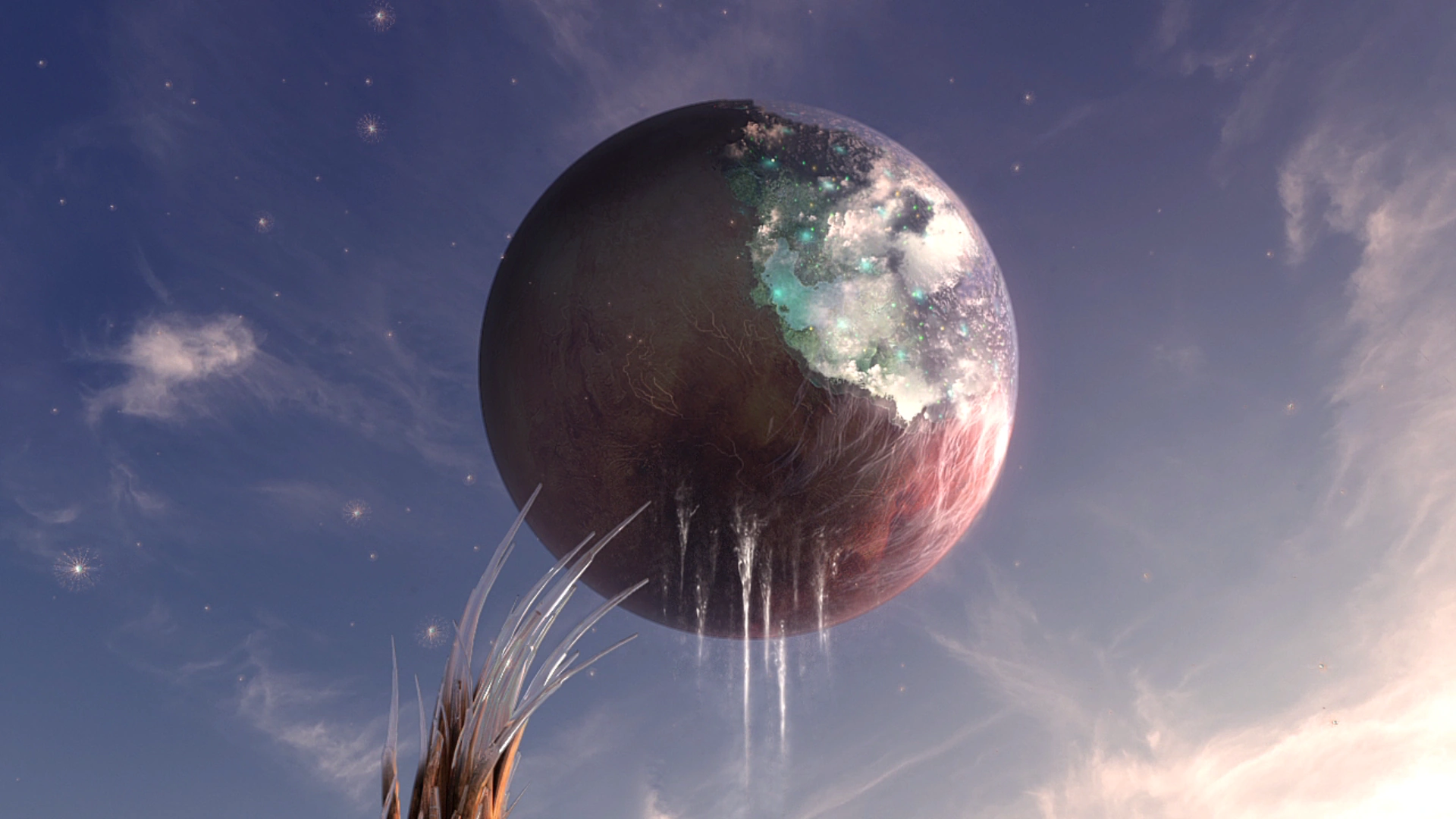

Cocoon, the floating planetoid.
Cocoon is a floating continent in the sky above the land of Gran Pulse. It appears like a low-hanging moon. Cocoon is hollow and its inhabitants live inside of the shell. It is a futuristic paradise filled with highly advanced technology. Cocoon was built by the fal'Cie centuries ago under the premise of protecting humanity from the "savage world of Pulse".
The concept of Cocoon as a floating post-scarcity utopia may be based on a literal take on the term (浮世, Ukiyo?, lit. Floating World), referring to the hedonistic, pleasure-seeking lifestyle of Edo-period Japan. The term ukiyo is also an ironic allusion to the homophone "Sorrowful World" (憂き世), the earthly plane of death and rebirth from which Buddhists sought release. The concept of Cocoon with a hard shell and the world on the inside may also allude to the concept of a world egg, a motif from many creation myths. The Greek version of the myth, the Orphic Egg, is often depicted with a serpent wrapped around it. In the Japanese version of the world egg myth, everything was once one entity in an egg-like chaos that contained the seeds of creation. Breaking of the world egg symbolizes the creation of the known world.
In Lightning Returns: Final Fantasy XIII, Ark appears as a floating satellite over the world of Nova Chrysalia, which evokes the impression of Cocoon but instead of being a whole world, the Ark is just a research station with a single current inhabitant.
Final Fantasy XIV
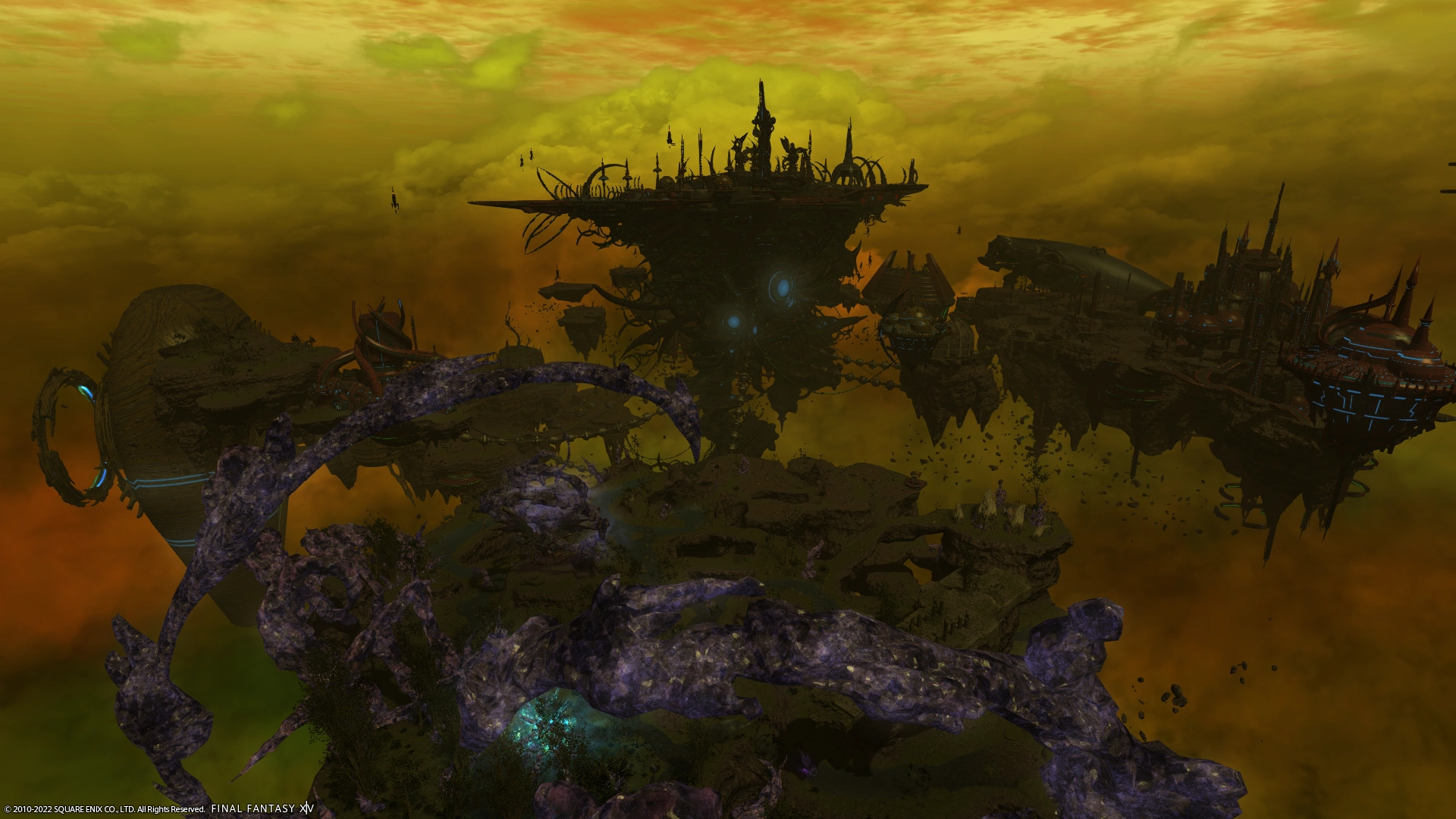

Azys Lla is a floating continent shrouded in legend, once the foremost center of research for the ancient Allagan Empire. It was in its halls that Allagan scientists perfected techniques for creating and twisting life, constructing automatons and binding primals. The first three primals the Allagan Empire ever bound, known as the Warring Triad, were captured and held in duress within the Flagship at the center of Azys Lla, where they remain to this day. Azys Lla was created with land taken from Northern Othard; to raise it into the sky, the Allagans used a device to sever the flow of aether to region, creating a desolate wasteland that would later be known as the Burn. Azys Lla was abandoned after the fall of the Allagan Empire, though its automated facilities have continued to function even in the absence of their masters some five thousand years later.
The location is an allusion to the Floating Continent from Final Fantasy VI.
Final Fantasy XVI
In the ancient past of Valisthea, the Fallen lived in flying cities. Their civilization came to an end around 1500 years before the game's events. For reasons unclear to the modern populace, the Fallen lost access to magic and their cities fell. 1500 years later, the ruins of the Fallen can be found all around Valisthea, as well as remarkably few usable weapons. As civilization fell to dark ages, the technology of the Fallen was lost, and civilizations began to form around the Mothercrystals instead.
Origin is a massive flying mothercrystal that serves as the game's final dungeon.
Final Fantasy: The 4 Heroes of Light
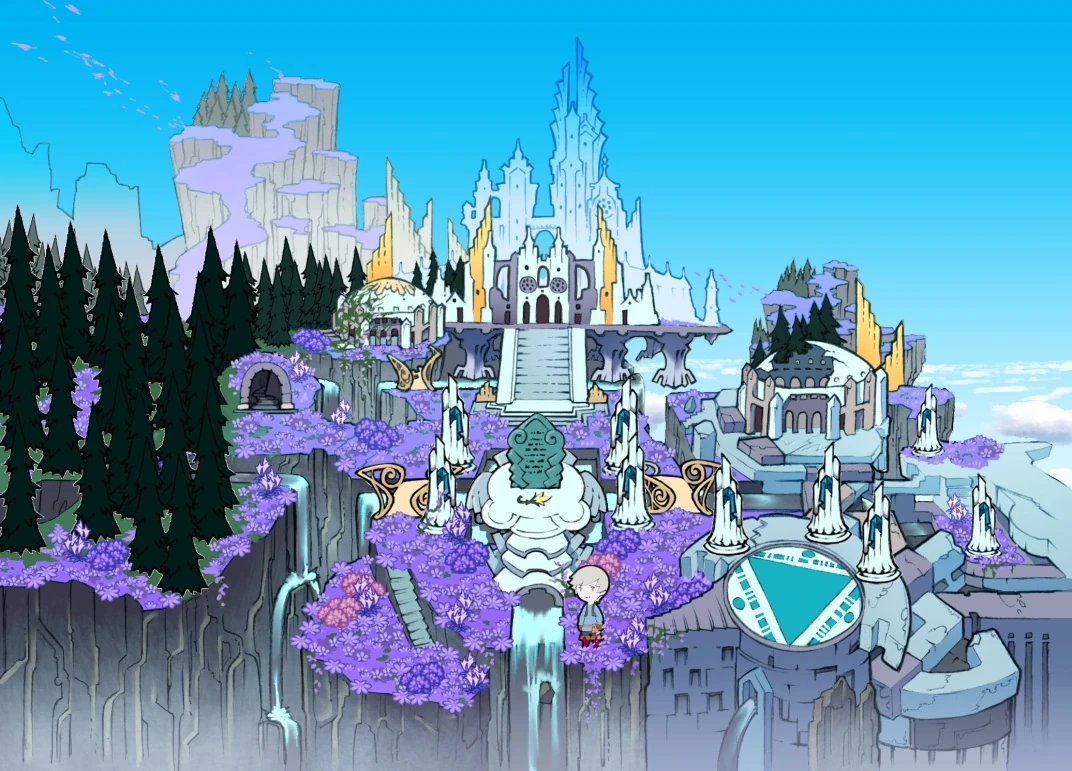

Spelvia is a floating continent that houses a near-abandoned magic city: the only inhabitants are Rolan and some automatons and animals. The floating continent is reached by building a rainbow bridge from the tallest tower on the world below.